

How Dr. Robert Graham Is Changing Patients’ Lives, One Cooking Class at a Time
- By Jeff O'Heir - April 28, 2015
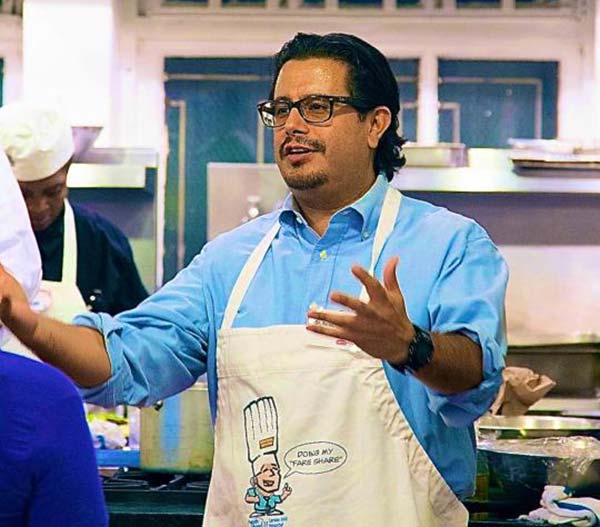
Dr. Robert Graham teaches medical residents how to cook nutritious vegetarian dishes for themselves and their patients. Photo: Dr. Robert Graham
The basil, rosemary, dill, and thyme on Lenox Hill Hospital’s rooftop garden in New York recently sprouted. But the seeds Dr. Robert Graham planted are delivering more than just herbs. Gradually, they’re helping to produce healthier patients and, as unbelievable as it may sound, nutritious hospital food that actually tastes good.
Graham, director of resident research at Lenox Hill and the new director of integrative health and wellness for the hospital’s parent organization, North Shore-LIJ Health System, is one of a growing number of doctors and healthcare workers throughout the country emphasizing a diet of whole, plant-based foods to help prevent and treat chronic diseases. As a director at one of New York’s largest health care systems and a frequent speaker at health and food conferences, Graham is helping to shape the nationwide conversation around his favorite theme: food as medicine.
“This whole ‘pill for an ill’ won’t work for these chronic illness,” Graham said, as he walked along the dozens of planters filled with herbs and micro greens that will eventually make their way into the roast chicken, pizza, salads, and side dishes the New York City hospital serves to its employees and patients. “Instead we have to address them through lifestyle choices. That really starts with food. You start with food and you can change everything.”

Before it became the Victory Greens rooftop garden, this is where the Lenox Hill Hospital staff used to come for smoke breaks. They now come to relax and pick fresh herbs. Photo: Dr. Robert Graham
Lenox Hill’s rooftop garden, in its second season, is just one of Graham’s initiatives. He’s working to set up small gardens at North Shore LIJ’s other 18 hospitals, and has plans to eventually establish a local micro-farm that will help supply the system’s kitchens. He gained national media attention for starting an ongoing series of cooking classes that teach medical residents – a group generally known for its bad eating habits and worse cooking skills – how to cook nutritious meals. Late last year he developed a similar class, “Food Is Medicine,” for the system’s veteran doctors.
The residents and doctors, who take the classes at the Natural Gourmet Institute in New York, are expected to pass along the cooking skills and nutritional information they learn with patients who suffer from among the most prevalent and preventable chronic diseases: obesity (almost 40 percent of Americans), diabetes (30 million, 86 million with pre-diabetes), high cholesterol, and hypertension.
Graham’s program is not alone in terms of connection how food impacts the health of the body. There are groundbreaking programs like Tulane School of Medicine’s Goldring Center For Culinary Medicine, the 16,000-square foot green rooftop and gardens at the Chicago Botanic Garden, and the St. Luke’s Rodale Institute organic farm in Eason Pa., which provides produce for the St. Luke’s University Health Network.
Graham’s teaching concept at is based on studies that show doctors who follow a healthy lifestyle are more likely to prescribe healthy lifestyle choices to their patients. Graham modeled the classes on those taught at the annual Healthy Kitchens, Healthy Lives conference, which bridges nutrition, healthcare and culinary arts.
“Patients don’t get satisfaction by taking pills. Patients get satisfaction by seeing real results made through lifestyle changes,” Graham said, referring to integrative medicine’s holistic approach of dealing with illnesses by helping patients maintain a healthy body, mind. and spirit.
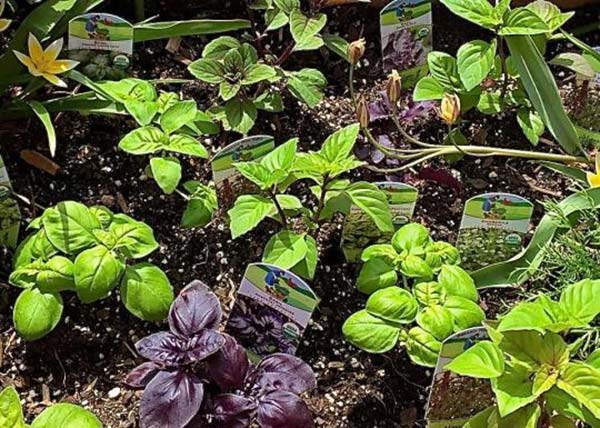
Basil and other herbs from Victory Greens make their way into some of the salads, soups and pizzas served to Lenox Hill’s staff and patients. Photo: Dr. Robert Graham
To help spread Graham’s message to the front-line workers who prepare the food for the hospital’s staff and patients, Michael Kiley, director of nutrition and dining services at North Shore University Hospital in Manhasset, N.Y., set up similar cooking classes for chefs, nutritionists, and administrators. The techniques and ingredients they learn about – baking with bean-based flours for gluten-free dishes or substituting tofu for cheese – eventually find their way to the hospital’s menus. “We’re always surprised to learn how comforting, satisfying and filling vegetarian and vegan meals can be,” Kiley said.
When the hospital revamps its menu next spring, patients will find that their traditional hospital fare – turkey tetrazzini; mystery meats covered with thick, equally mysterious sauces; green Jello – replaced by dishes created with locally grown vegetables, herbs, and fruits, as well as lower-sodium soups and fresher salads
“By supporting our chefs, our causes, our cooking classes, Robert creates a shared passion,” Kiley said. “He makes it contagious so that everyone feels the same way he does about the issues. It shows that if you’re passionate about something, other people will want to take the lead.”

The Natural Gourmet Institute teaches North Short LIJ residents, doctors and staff how to cook vegetarian and vegan dishes like this kimchi stew. Photo: The Natural Gourmet Institute, Facebook
Graham’s philosophy is part of the healthy eating trends – driven mainly by consumer demand – that are changing how large institutions, fast food restaurants and other players in the food industry cook, source, and produce food. In many cases the health care industry has been slow to adopt those trends.
“I’m blown away when I see the explosion of places like Fresh and Co and Chop’t and these big institutions that feed a lot of people healthy, nutritious food each day,” he said. “I think hospitals can also do it.
“I think we have to start developing a new way of feeding people in our hospitals,” he said. “A very simple way of doing that is cooking better, wasting less, and eating more nutritious foods that actually taste good.”
Hungry for more vegetarian and vegan dishes that actually taste good?
Don’t be afraid. Try these vegetarian dishes at your next party.
Vegetarian includes desserts, too. Make this baklava.
Roasted cauliflower is always good. But as good as this?
We know most hospital food absolutely sucks. Have you had any that’s actually good? Visit our Facebook page and let us know.!
The Secrets Of The Lost Persian Empire - Lost Worlds
Lost Worlds investigates the very latest archaeological finds at three remote and hugely significant sites - Angkor Wat, Troy and Persepolis. Lost Worlds travels to each site and through high-end computer graphics, lavish re-enactment and the latest archaeological evidence brings them to stunning televisual life. From the 900-year-old remains of Angkor Wat in the Cambodian jungle the staggering City of the God Kings is recreated. From Project Troia, in North West Turkey, the location of the biggest archaeological expedition ever mounted the lost city is stunningly visualised and finally from Persepolis the city and the great Persian Empire are brought to life.
Iran in the Bible - The Forgotten Story
For centuries Iran was known as Persia--the greatest empire the world had ever seen. But part of her story is often forgotten.
Woven together in the Bible are prophecies and accounts of Persian kings, epic battles, and royal decrees that changed the world. And surprisingly to many, the Bible speaks of Persia as being chosen and favored for God's grand purposes.
In 'Iran in the Bible,' this remarkable story is told using ancient Persian texts, archaeological discoveries, and insights from scholars. What's revealed is that both Persia and the Jewish people played a strategic role in the fulfillment of God's promise to Abraham--the promise that through him God would bless the world.
Showing how God is directly involved in history, 'Iran in the Bible' offers comfort to those living in a world of uncertainty.
GMO war in Hawaii: EPA liars on parade
EPA testimony on Monsanto pesticides
- By Jon Rappoport - April 27, 2015
“There is a great big elephant in the room for regulatory agencies. It’s the combined effect of many different chemicals acting together on the human body. For example, five different pesticides arriving in your food at once. The agencies don’t want to think about that. They don’t want to run those tests. They want to pretend there is no elephant at all.” (Notes for AIDS Inc., Jon Rappoport)
The date was July 1, 2014. The County government of Maui held a hearing.
It was labeled “POLICY AND INTERGOVERNMENTAL AFFAIRS COMMITTEE, Council of the County of Maui, MINUTES, July 1, 2014” (via County of Maui: Council – Policy and Intergovernmental Affairs Committee (2013-2014))
The purpose? Gain knowledge about the upcoming ballot measure that, if passed, would put a temporary block on all Monsanto/Dow secret GMO experiments in Maui County, pending a complete investigation.
Four months later, the ballot measure did pass—and then Monsanto sued, the vote was suspended, and the case has dragged on in federal court.
But on July 1, 2014, key testimony by the EPA [US Environmental Protection Agency] revealed a massive hole in their regulatory oversight and their “science.”
Put simply, it’s this: the EPA evaluates the toxic impact of pesticides by examining each chemical compound separately—but completely ignores the potential harm that results from these compounds acting together.
No outsider knows exactly how many pesticides Monsanto and Dow have been testing in Maui County. No outsider knows their precise composition. No outsider knows how many of these pesticides are labeled “restricted use,” meaning they are highly toxic.
So naturally, any sane scientist would demand to know all these details; and then he would develop and run tests to discover what harm to health the various chemical combinations would create.
But this is not the EPA’s position.
The EPA has a “divide and conquer” strategy: ignore the obvious fact that dozens of chemicals, entering the body, will have effects beyond what each chemical, separately, will cause.
This is purposeful EPA “see no evil.”
Here are key statements EPA representatives put on the record at the 2014 Maui hearing:
COUNCILMEMBER COCHRAN: …So do you folks test combinations of pesticides in determining, you know, your reasonable, unreasonable impacts?
MR. [BILL] JORDAN [EPA]: We do in some areas and in other areas, we don’t. Where pesticides have what’s called a common mechanism of toxicity, we will take into account the fact that exposure to chemical A and chemical B is likely to add up. When chemicals do not have a common mechanism of toxicity, then our regulatory approach is to treat them as not being additive. This is consistent with advice that the National Academy of Sciences gave in a report they released in April of 2013 on assessing risks to, of pesticides to wildlife. So generally speaking, we try to look at situations where there are common mechanisms but we don’t anticipate any synergistic interactions in the absence of that.”
Later on in the hearing, Dr. Lorrin Pang testifies that the EPA is completely misinterpreting the “advice of the National Academy of Sciences.”
Jordan’s chilling remark about the EPA not anticipating any synergistic interactions is, surely, willful ignorance. It’s on the level of saying, “If you ingest 20 or 30 toxic chemicals, there’s no reason to suspect they’ll produce problems together, beyond their individual ability to cause harm. We don’t need to consider that possibility.”
Patently absurd. And insane.
The EPA’s Jordan, later in his testimony, also defends glyphosate, the primary ingredient in Monsanto’s Roundup, which the World Health Organization has just labeled “a probably carcinogen.” Jordan states that, “as far as herbicides go, this is one of the safer products and as authorized for use by EPA, it does not cause any unreasonable risks to people or to the environment.”
Finally, Jordan doubles down on his pronouncement that there is no need to test pesticides for their combined harm to health. Claiming that the National Academy of Sciences is the champion of good sense, Jordan states:
“They advised us that it’s really not practical to obtain test data on mixtures [of different pesticides acting together to cause harm]…[and] if the exposure to the [individual pesticide] components are gonna be kept at a level that does not have any adverse effect on its own, then you should not expect any kind of combined effect to occur.”
This is on the level of asserting that, since a few familiar chemical compounds don’t, individually, cause explosions, then combining them in a barrel and connecting them to a fuse and lighting the fuse should be no problem.
It would take a sixth-grader, with a reasonably good science course under his belt, about 30 seconds to refute Mr. Jordan and the EPA.
But that Agency isn’t worried about criticism. It has other issues on its collective mind. For example, providing cover for Monsanto and Dow and their pesticides.
Last November, the citizens of Maui made their voices heard. They voted to place a temporary stop on all local Monsanto/Dow GMO experimentation, pending a complete investigation into its details. Monsanto and their allies immediately sued, the case went to federal court, and the vote has remained unenforced ever since.
That’s called justice.
And now you see the EPA has absolutely no interest in ever doing inspections in Maui, to see what the combined effects of Monsanto/Dow pesticides are on the population.
More of the same kind of justice.
Jon Rappoport
The author of three explosive collections, THE MATRIX REVEALED, EXIT FROM THE MATRIX, and POWER OUTSIDE THE MATRIX, Jon was a candidate for a US Congressional seat in the 29th District of California. He maintains a consulting practice for private clients, the purpose of which is the expansion of personal creative power. Nominated for a Pulitzer Prize, he has worked as an investigative reporter for 30 years, writing articles on politics, medicine, and health for CBS Healthwatch, LA Weekly, Spin Magazine, Stern, and other newspapers and magazines in the US and Europe. Jon has delivered lectures and seminars on global politics, health, logic, and creative power to audiences around the world. You can sign up for his free emails at NoMoreFakeNews.com or OutsideTheRealityMachine.
Vermont Becomes First State to Have Mandatory GMO Labeling
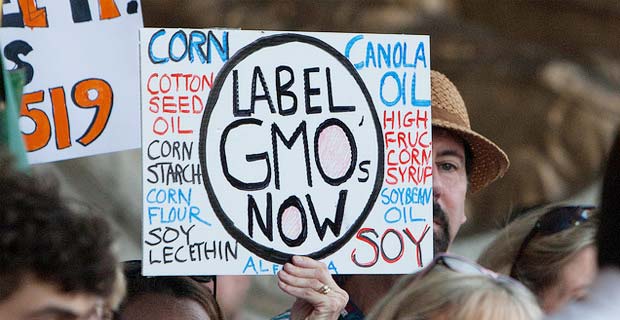
Will other states dive in by 2016?
- By Christina Sarich - April 24, 2015
After months of consumer and activist comments, picketing at the Attorney General’s Office, and winning a lawsuit against Monsanto who tried to overturn the original law, Vermont has just become the first state to have mandatory GMO labeling.
Vermont became the first state to become GMO-labeled (a step toward becoming GMO-Free) in 2014, but Monsanto, Dow, Bayer and other biotech interests decided that consumers had no rights at the state level to determine what they wanted to eat. Vermont was brave enough to uphold the voted-upon law anyhow, and even put money aside for the legal fight they knew would ensue when the new legislation passed.
Attorney General Bill Sorrell said that the formal adoption of the GMO labeling law gives ample time to food manufacturers to change their products or lose an entire state’s business.
I’m proud of Vermont for standing strong against biotech, and we need to do the same now as members of Congress will vote this week on the Trans Pacific Partnership (TPP). If this ‘Nafta-on-steroids” bill wins the vote, then it would take away state’s rights to ban or label GMOs, and all the effort Vermont has put into cleaning up its food supply will have been for naught.
Make sure you call or email Congress today and tell them not to allow the TPP.
This article originally appeared at Natural Society.
- You are here:
-
Home

- News