

How vaccines are made: Monkey kidneys, spinal material, animal pus and more...
Tuesday, October 11, 2011 - By: Dr. Kaitlyn Moore
The issues surrounding the dangers of vaccines require a look into how they are made and to what we are exposing ourselves to. So, what are vaccinations exactly?
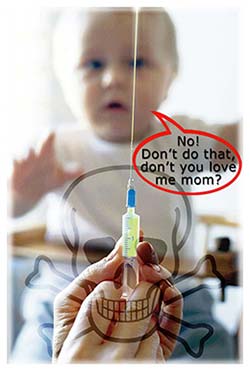 Generally speaking, vaccinations are inoculations that attempt to confer immunity against a specific disease. Our anti-body defenses are stimulated when weakened versions of bacteria or viruses are injected into our system.
Bacterial vaccinations are grown in petri dishes but viral vaccinations require a live host. Recent medical advances have widened the sphere of what "live host" actually means (http://www.nae.edu/Publications/Bridge/EngineeringandVaccineProductio...).
Edward Jenner, credited with discovering the small pox vaccine, observed that milkmaids who had been infected with cowpox ended up immune to smallpox. Jenner's first "inoculation" was completed by injecting an 8 year old with the pus from the lesions of a milkmaid with cowpox (http://www.experiment-resources.com/who-invented-vaccination.html).
Modern Day Vaccinations
Tragically, even with all of the strides made in modern medicine, vaccination preparation has actually gotten worse. Original vaccinations were contrived by using the infected matter from another human being and introducing it into the body.
Trouble began once animals began to be used as hosts. Enter Dr. Jonas Salk and the race to develop a commercially viable polio vaccine. Salk and his peers concocted from a mad scientist brew of ingredients including the minced up spinal cord from a 9-year-old deceased patient, water, blood, flies, feces, and human cell matter. This mixture was injected into the brains of monkeys, most of which died instantly or became paralyzed.
Undaunted, Salk plugged away eventually creating the commercial version of the polio vaccine, developed in part from "the feces of three healthy children in Cleveland."
Ironically this infamous father of the polio vaccine just recently was exposed for his role in illegal experiments on mental patients(http://www.naturalnews.com/031564_Jonas_Salk_medical_experiments.html).
While today's formulations don't contain feces, they are still derived from live hosts including cows, monkeys, pigs, chicken embryos, and human diploid cell.
Cell matter is extracted from these hosts, combined with toxic chemicals like Thimerosol (mercury), formaldehyde, aluminum hydroxide and a variety of other substances, before being injected into our bodies (http://www.cdc.gov/vaccines/pubs/pinkbook/downloads/appendices/b/exci... and www.vaclib.org/pdf/vaxcont2.pdf). The side effects are autism, diabetes, asthma, MS, SIDS, and more.
Vaccine Pollution
The viral cell matter presents a significant health risk due to the plethora of dangerous animal viruses, RNA, DNA, and other foreign material that can't be filtered out of the final preparation.
Award winning journalist Janine Roberts, author of Fear of the Invisible and a host of other papers developing into the truth behind vaccine development, discovered that "vaccines are not filtered clean, but suspension from the manufacturers incubation tanks in which the viruses are produced from substrates of mashed bird embryo, minced monkey kidneys, or the infamous cloned human diploid cells only scanned for a few known contaminates - while the unknowns remain just that -- unknown."
Even worse, the government has provided legal protection to the vaccine industry and their polluted products via FDA regulations, more specifically 21 CFR.
"Virus interaction can't be controlled -- by their very nature they are mutating organisms. There is a well-founded concern that these animal viruses are able to cross species lines and adapt to their new host environment."
Dr. Leonard Hayflick, a virologist at both Stanford and the University of California at San Francisco raised a concern that the common primary culture used for making vaccines with animals and bird embryos has created a situation where it is "apparent that these cells contained many unwanted viruses, some of which were lethal to humans." (http://www.globalresearch.ca/index.php?context=va&aid=15452)
For instance the SV40 virus that originates in monkeys made its way into the human population via the polio vaccination and has been tied to cancer non Hodgkin's lymphoma and brain tumors(http://www.informedchoice.info/polio.html) (http://www.tetrahedron.org/articles/vaccine_awareness/through_the_nee...).
The World Health Organization is aware that MMR vaccines are tainted with avian leukosis virus that has been linked with leukemia (http://www.fda.gov/ohrms/dockets/ac/98/transcpt/3476t1.pdf) (pg 19) and Rotatrix is one of the most recent vaccinations exposed as being contaminated with DNA matter from animals- in that case pigs(http://vaccineawakening.blogspot.com/2010/04/vaccine-contamination-pi...).
Government Duplicity
In response to questions regarding the safety of vaccinations, a governmental official answered that, "safety issues would then have to be considered based on the nature of that material. We would hope that they would select materials that would be more amenable or pose less of a risk, but that may not always be the case." (http://www.fda.gov/ohrms/dockets/ac/98/transcpt/3476t1.pdf)
However, the American government remains steadfast in its assurances to the American public that vaccinations are required to keep your children healthy (http://www.vaccines.gov/).
Yet, the risk has been great enough for Congress to enact the Childhood Vaccine Injury Act of 1986, which provides monetary relief for the hundreds of people that file claims for vaccine related injury or death.
The truth about vaccines is like most things - money talks. The vaccination industry made over 29 billion dollars in 2009 and is slated to make 54 billion by 2016 (http://centerforvaccineethicsandpolicy.wordpress.com/2010/01/17/globa...).
A certain amount of this profit is used to payoff medical advisors to support pro-vaccination campaigns (http://www.naturalnews.com/029441_vaccine_manufacturers_advisors.html).
The government's shameful cosigning of pharmaceutical companies bid to increase profits and reduce lawsuits is evidence that not much has changed when it comes to governmental policy and its effect on citizens(http://www.lawyersandsettlements.com/articles/drugs-medical/vaccine-p...).
What the pharmaceutical La Cosa Nostra does its very best to hide is that the key to overcoming diseases is not vaccinations but the backbones of good health -- nutrition, cleanliness, and clean water.
"The most likely factors leading to health improvements are a rise in the levels of nutrition and the slow spread of modern ideas of personal hygiene. The principal factor behind the improvement in health, in developing countries is probably not any form of health measure, but economic development itself. Mere exposure to a disease agent need not produce clinical disease and very frequently does not do so."
Malnutrition is of the highest importance because it hampers the body's natural resistance and acts "synergistically" with disease agents to increase the incidence and severity of clinical diseases.
Think long and hard before you opt for the next round of vaccinations, the result could be more than you bargained for.
Sources:
Sharpston M.J., Health and the Human Environment, in (Ghosh P.K. editor) Health, Food and Nutrition in Third World Development, International Development Resource Book No. 6, Greenword Press, Westport, Conn., U.S.A., 1984, pp. 85 and 80. (http://www.whale.to/vaccine/obomsawin3.html )
Fear of the invisible (http://www.scribd.com/doc/49973741/Dangerous-Impurities) J. Roberts/Medical Veritas 5 (2008) 1897-1905.
In this interview, you will hear Dr. Humphries talk about vaccines harmful effects
Dr. Humphries talk about vaccines harmful effects includes:
* Why she became concerned about vaccines after noticing kidney failure in patients who recently received vaccines.
* Why vaccines are often contaminated with unknown viral strains, and why the vaccine industry has covered up known vaccine contamination (and knowingly sold contaminated vaccines to be used on the public).
* Why the entire vaccine industry needs to be questioned, and why a new effort is needed to scientifically assess whether vaccines are really safe or effective.
* Why the fairy tale that "vaccines eradicated polio" is a false mythology -- here's what really happened.
* Why the "smallpox" vaccine has never been proven to be effective against smallpox at all.
* Why vaccine industry research is extremely flimsy and ignores rigorous standards of scientific evidence. (Using improper placebos designed to minimize the appearance of side effects, for example.)
* Why the vaccine industry won't test vaccines versus unvaccinated children (they're terrified of the results).
* Why children caught up in outbreaks of measles are often the very same children who were vaccinated against measles!
* Why vaccines may actually suppress the immune system and cause increased vulnerability to future infections.
* Why many childhood infections such as chicken pox are perfectly natural, normal and even HEALTHY.
* Why the outlandish and unscientific behavior of the vaccine industry is causing an erosion of credibility across all "science."
U.S. Public Schools Train to Finger Mental Cases
- By James Tracy - August 26, 2013
An appendage of the world’s foremost advocate of psychiatric treatment, the American Psychiatric Association, is actively promoting a “teacher training program” that will enlist public school staff to identify “troubled thought patterns” of teenage students, NBC news reports.[1] The campaign is being pushed by the American Psychiatric Foundation, the “philanthropic and educational arm of the American Psychiatric Association,” according to APF’s own website.
The rationale for the new program together with the military-style training carried out in the midst of schoolchildren is that the country cannot risk having another tragedy such as the Sandy Hook School massacre or one authorities say came close to transpiring in Decatur, Georgia.
Upon its introduction in 21 states and the District of Columbia, “Typical or Troubled?” will instruct all school staff “from custodians to counselors” to detect and report “warning signs” that can include “persistent sadness, irritability, withdrawal, and even a major change in eating habits.” In other words, the ups and downs that tend to characterize the frequently awkward and uncertain progression toward adulthood termed “adolescence” by the Darwinian-inspired American psychologist G. Stanley Hall over a century ago.[2]
Once a “troubled” candidate is identified their parents are contacted and the child is assigned to a mental health “specialist.” In other words, this alleged public health and safety campaign constitutes what will likely become a major client referral program for the psycho-pharmaceutical industry that has essentially enlisted government employees for surveillance of the unsuspecting subjects and identify probable treatment candidates.
What is of at least equal concern is the deceptive technique used to thrust this campaign on the public. The American Psychiatric Foundation masquerades as an independent entity that “retains control over all of its public education programs, content, and materials.” Indeed, as APF Executive Director Paul Burke explains to NBC, the philanthropic organization’s policy dictates “’that no supporter or founder has any direct influence over the content of any APF public education program.’”[3]
Yet a quick visit to the APF’s website reveals that it is a front organization for the powerful American Psychiatric Association—even operating from the same Arlington, Virginia office suite. Perhaps unsurprisingly, the APF also has net assets in excess of $52 million, according to the organization’s 2011 Form 990.
Such scrutiny would have been very simple (and an ethical given) for NBC News to point out. But APA’s practitioner membership alongside the pharmaceutical industry that so prevalently advertises on major corporate media outlets like NBC stand to profit handsomely from the anticipated revenue “Typical or Troubled?” and similar campaigns will generate going forward.[4]
The APA has surely taken the observations of master propagandist Edward Bernays to heart and practice. By establishing the ostensibly innocuous APF to initiate presumably do-goodish programs as “Typical or Troubled?” the psycho-pharmaceutical juggernaut further ingratiates itself in the sordid national landscape of horrific school shooting spectacles and accompanying police state terror.
While public employees are commissioned as mental health surrogates, thereby offering up most of the nation’s children to quasi-medical scrutiny and prospective forced drugging, genuinely demonstrable public health menaces such as: genetically modified foods in the cafeteria, electromagnetic pollution via “WiFi” pervading school campuses, and the Bill and Melinda Gates Foundation’s many social engineering initiatives are readily espoused and actively promoted. Such developments should make ever clearer the fact that public education entails very little that is truly “educational”, and much that should shame any self-respecting nation.
Notes
[1] Erika Angulo, “To Prevent School Violence, Teachers Learn How to Spot Mental Illness,” NBC News, August 25, 2013.
[2] G. Stanley Hall, Adolescence: Its Psychology and Its Relation to Physiology, Anthropology, Sex, Crime, Religion, and Education. Originally published in 1904.
[3] Ibid.
[4] Janice Lloyd, “Antidepressant Use Skyrockets 400% in Past 20 Years,” USA Today, October 20, 2011.
Reasons To Just Say No To Vaccines - Interview with Dr. Sherri Tenpenny about the dangers of vaccines
By Dr. Sherri Tenpenny, DO - Feb 03, 2011
Vaccinating children has become sacrosanct in our culture. Doctors and government officials insist that vaccines are safe, and parents are pressured into compliance. In fact, parents have been reported to social services by doctors who consider not vaccinating to be a form of medical neglect or child abuse. Legislators across the country are attempting to pass laws in which parents will have no rights to refuse what is injected into their children.
The inconsistency of rules involving the care of children is striking. Mothers are in complete control of their child’s health while in the womb. They make choices against eating tuna, taking medications, smoking cigarettes and avoiding alcohol. Mothers may choose to even terminate the pregnancy. But the moment the baby arrives, control over their child’s body is forcibly surrendered to healthcare providers and the government. The leg is jabbed with shots, eyes are gooped with antibiotic ointment and the heel is poked to get a drop of DNA-containing blood. With the passage of the Newborn Screening Saves Lives Act of 2007, signed into law April 24, 2008, the blood will be collected and warehoused for scientific research. Parents have little or no say in any of these events. (see my previous article, “Who Owns Your Child?”)
Vaccination is promoted by an industry that capitalizes on fear and the perceived necessity of the procedure has become multi-generationally entrenched. We have been programmed by the medical community and the media to believe that everyone – children and adults -- will become sick, and likely die, unless they are vaccinated. This explains why not vaccinating can be unfathomable to new parents who are unreasonably terrified of what were considered normal childhood illnesses only a few decades ago. The majority adults over 50 years of age remember having measles and the chickenpox. Both were mostly mild diseases, lasting seven to fourteen days, and leaving behind lifetime immunity.
And even though chickenpox is rarely fatal, most parents opt to vaccinate. Merck & Co. estimated that as of December 31, 2007, 80 to 85 percent of all four to six-year-olds had received two doses of Varivax®, at one year and a booster before school. With little attention on the problems with the chickenpox vaccine cited in the media, most don’t realize that it can cause harm. Research shows that nearly 1 in 5,000 children who receive the chickenpox inoculation develop shingles within ten years of being vaccinated. Shingles, an intensely painful, blistering rash, is most commonly seen in the elderly or the chronically ill. It was rarely, if ever, seen in healthy children before the introduction of this vaccine. Other serious side effects, such as seizures, pneumonia, and anaphylaxis (a severe allergic reaction), have been reported as a result of Varivax. Before it became available, about 50 children died every year from rare or unusual complications of the chickenpox. Put in perspective, 53 children died in drowning accidents in the [U.S.] state of Georgia in 1999.
Vaccination has been cited as one of the ten greatest public health achievements of the 20th century. However, it doesn’t require an advanced degree in science to grasp that the public health accolades, celebrating high vaccination rates and low infection rates, have lead to serious health consequences across the globe. Vaccine ingredients seem to be playing a substantial role.
Gelatin, one of many ingredients in vaccines, is known to cause allergies and asthma. Allergies are now the most frequently reported chronic condition in children, limiting activities in four out of 10 children. Asthma, the second most common chronic childhood disease, affects more than one child in 20. The combined healthcare costs of asthma and allergies have soared to more than $25 billion/year. Vaccines that contain gelatin include chickenpox, MMR, Boostrix (teen pertussis booster), Tripedia (DTaP) and the adult shingles vaccine, Zostrix. Vaccine gelatin may be contributing substantially to the skyrocketing incidence of, and expenditures on, asthma and allergies.
Another vaccine additive, formaldehyde, can interrupt the normal function of the immune system. A colorless, pungent-smelling gas, formaldehyde can cause watery eyes, burning sensations in the eyes and throat, nausea, difficulty in breathing and asthma attacks when exposed to amounts as small as 0.1 parts per million. It is listed as a hazardous chemical on eight federal regulatory lists and considered to be one of the ten worst compounds on the ecosystem and health. Between 10 and 20 percent of general population has a reaction coming in contact with formaldehyde. Topical exposure can cause a mild reaction, such as dry skin and redness. The California Indoor Air Quality Fact Sheet states there is no known threshold level below which cancer risk does not exist. The World Health Association (WHO) recommends that an exposure should not exceed 0.05 ppm or 0.05 mg/kg. So, for 12 pound baby (about 5kg), the maximum exposure should be below 0.25 mg. But with the current schedule, children receive more than ten times that amount, more than 3.5 mg, if they receive every mandated vaccine. Vaccines that contain formaldehyde include DTaP, polio, influenza, hepatitis A and hepatitis B.
Thankfully, mercury (in the form of thimerosal) has been removed from most vaccines. However, measurable amounts are still found in multi-vial flu shots, tetanus boosters, Energix-B (hepatitis B vaccine), Menomune (college meningitis vaccine), TriHiBit and Tripedia (both DTaP vaccines), and Twinrix (a combination hepatitis A and hepatitis B vaccine). Trace amounts remain in many more. Countless children have developed autism and there is strong evidence that their brains were injured by the preservative thimerosal.
Follow the Money
Positioned as a loss leader, vaccines appear to be the economic drivers of both the medical and the pharmaceutical industry. A loss leader is a business technique in which a less-expensive product is sold or given away for the sake of offering another product at a greater profit. This common practice is utilized to introduce new customers to a product, to build a new customer base and/or to secure future recurring revenue. Using a loss leader is more than just a nifty business trick - it can be a very successful economic strategy when executed properly. The classic example of a loss leader is the sale of razor blades. Companies like Gillette essentially give their razor units away for free, knowing that customers will buy their replacement blades, where the company makes all of its profit, for as long as they use the razor.
Vaccines play a similar role for the drug companies. The cost of a vaccine is relatively inexpensive compared to the billions of dollars spent on medical interventions, medications—and even more vaccines—dispensed as a result of a vaccination side effect.
Consider this example: the potential consequences of an inoculation with one of the two newly approved vaccines to prevent a rotavirus diarrheal infection, RotaTeq® and Rotarix®.
Side effects listed on the package insert for RotaTeq include diarrhea, vomiting, irritability, fever, wheezing and coughing. RotaTeq has also been associated with bloody stools, a warning sign of a serious complication called an intussusception. Triggered by the vaccine, intussusception is an event where a portion of the bowel slides into the next, much like the pieces of a telescope, causing an obstruction. Swelling, inflammation, and decreased blood flow to the fragile lining of the bowel cause the intestine to die. Between February 3, 2006, when RotaTeq was licensed, and January 31, 2007, twenty-eight cases of intussusception were reported in infants who received RotaTeq in the U.S. Sixteen of the 28 infants required hospitalization and surgery on their intestine.
In February, 2008, the FDA issued a warning that there was a "statistically signficant increase in pneumonia-related deaths and seizures" associated with the other vaccine for rotavirus infection. To reduce the risk of pneumonia, doctors promote the pneumococcal vaccine, Prevnar®. A side effect of Prevnar, as listed in the package insert, is ear infections, increasing the use of antibiotics. The many rounds of antibiotics required to treat recurring ear infections can cause serious bowel problems, leading to blood tests and evaluations by the pediatric gastroenterologist. The cause of all these additional problems is rarely indentified as a side effect of a vaccination.
All of this can result from a Rotarix or a RotaTeq shot, given to avoid a common infection that most children contract, and recover from uneventfully, by the time they are three years of age.
Another example is the hepatitis B vaccine, given at birth, can cause diarrhea, vomiting, and dyspepsia (a condition associated with gnawing or burning stomach pain and persistent vomiting). Tiny children receive x-rays, undergo procedures such as endoscopy, and are given adult medications such as Prilosec® or Nexium® to resolve their discomfort. Unfortunately, since the dyspepsia is not recognized as a vaccine side effect, additional dosages of the hepatitis B vaccine are administered, often compounding the problem.
Vaccines are the bedrock of expanded illnesses, skyrocketing medical costs and exponential drug sales. But it is more than individual vaccines that are cause for concern. The sheer number of vaccines children now receive between birth and six years of age is staggering and include: Diphtheria (a rare throat infection), pertussis, and tetanus (the DTaP shot); Haemophilus influenza type b (the Hib vaccine); measles, mumps, and rubella (the MMR shot); pneumococcus (the Prevnar vaccine); polio (three strains); rotavirus (five strains); and individual vaccines for hepatitis A, hepatitis B, chickenpox, and meningitis. Flu shots (three strains) are now given annually, beginning at six months of age. That adds up to 113 vaccine antigens by kindergarten given in about 33 shots.
Parents are becoming wary of the many needles being jabbed into their precious babies at the tender age of two, four and six months. In response, the drug companies are combining several vaccines into a single injection. Comvax (hepatitis B and HiB), ProQuad (MMR and chickenpox), Pediarix (DTaP, polio and hepatitis B) and two newly approved vaccines, Kinrix (DTaP and polio) and Pentacel (DTaP, polio and HiB) have been developed. Parents are deceived into believing that the combination shots are fewer vaccines; they are not: The number of jabs is reduced, but the number of antigen doses remains the same.
A significant problem with the combo shots is that, in the event of an adverse reaction, there is no way to determine which component caused the problem. This eliminates the ability to refuse additional doses of a particular vaccine. The ability to make a claim with the Vaccine Injury Compensation program is likewise negated.
For adults who believe the days of deciding about vaccines are over because their children are now teenagers, think again: Teenagers are the new target market for the vaccine industry. Boosters are being recommended for vaccines given before five years of age and the new teen vaccines, Gardasil (for cervical cancer) and Menactra (for college-type meningitis), are being heavily marketed by doctors and the media. The additional vaccines add substantially to the total number of vaccine antigen. If little girls receive all doses of all recommended vaccines, they will have received 156 vaccine antigens and about 45 shots by middle school. Boys, not yet approved for Gardasil, receive slightly fewer: only 144 vaccine antigens and about 42 shots.
Many more vaccines in the pipeline will put teens and adults in the industry crosshairs. In 2007, adult-teen vaccine sales overtook pediatric sales, the first time ever, accounting for 50.6% of all revenues. This development has been attributed to robust sales of influenza vaccines and the success of Merck’s advertising to promote Gardasil for the HPV virus. Gardasil alone posted $1.5 billion in sales in 2007.
And yes, it’s about the money. In addition to driving revenues as a loss leader, the newer vaccines are driving revenues through direct sales of expensive vaccines. According to Genetic Engineering & Biotechnology News,
In 2007, the world market for preventive vaccines totaled $16.3 billion, up more than 38%, from $11.7 billion, in 2006. The market is predicted to increase at a compound annual rate of 13.1% during 2008. This growth rate is unheard of in other drug categories, especially since this is expected to be a challenging year for the pharmaceutical industry. Few other drug categories will see as many new product introductions and such public-policy attention.
In 2007, global sales of pediatric vaccines exceeded $8.0 billion, an increase of 25.2% over 2006 sales of $6.3 billion. This high growth was due in part to continued heavy gains of Wyeth’s pneumococcal vaccine, Prevnar, as well as the introduction of Merck’s, RotaTeq….This will result in an overall market expansion of 14.2% per year from 2008 to 2013, with total sales reaching $18.8 billion at the end of the forecast period.
Vaccines are promoted as a way to boost the immune system. It only stands to reason that injecting multiple doses of pathogens and measureable amounts of chemicals taxes the immune system instead of enhancing it. I’ve observed in families who have more than one child and have chosen to vaccinate the first, but not subsequent children, the younger siblings seem to come down with fewer infections and are much healthier overall. I don’t believe that’s a coincidence.
Preventive measures aimed at enhancing health can be incorporated into simple, lifestyle changes. Here are a few helpful suggestions:
• Staying away from white (refined) sugar and opting for healthy foods and sugar-free snacks is the first step.
• A high-quality, sugar-free, multi-vitamin/multi-mineral supplement is recommended for all ages, too, not just for picky eaters.
• The benefit adequate sleep has on health cannot be overstated. Without adequate sleep, the body is much more susceptible to illness. Toddlers need up to 14 hours a day of sleep, but they typically get only about 10½. Children between the ages of three and six need at least 10 to 12 hours per night; between seven and twelve years of age, 10 hours; and teens and adults need at least 8 hours. Most children get far less; and parents need to enforce bed times for their children, and for themselves.
• Provide your family with clean, filtered water.
• Encourage regular—but not obsessive—hand washing.
• Make sure to get away from the TV and the computer several hours a day to run and play outside. Exercise stimulates the immune system and has a whole cascade of positive effects.
Persons who investigate both sides of this issue rarely continue vaccinating. That speaks volumes. If you do decide to “Say No to Vaccines,” you’re not alone. Thousands of parents who have experienced first-hand the consequences of vaccination, including autism, are not looking for “something to blame.” They are begging other parents to learn about the risks before they proceed. Learn to trust your intuitive sense and investigate the full spectrum of the vaccination issue. You’ll be glad you did.
© 2008 - Sherri Tenpenny - All Rights Reserve
- You are here:
-
Home

- News