

The Spice That Prevents Fluoride From Destroying Your Brain
- By Sayer Ji, Founder - April 7, 2014
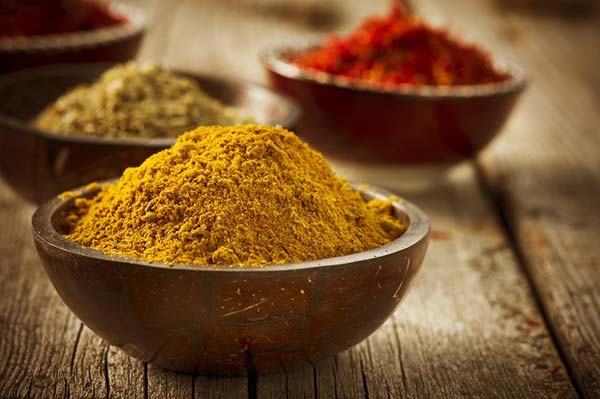
Fluoride is found everywhere today, from antibiotics to drinking water, none stick pans to toothpaste, making exposure inevitable. All the more reason why new research proving this common spice can prevent fluoride damage is so promising!
Fluoride's neurotoxicity has been the subject of academic debate for decades, and now a matter of increasingly impassioned controversy among the general public, as well. From 'conspiracy theories' about it being first used in drinking water in Russian and Nazi concentration camps to chemically lobotomize captives, to its now well-known IQ lowering properties, to its ability to enhance the calcification of the pineal gland – the traditional 'seat of the soul' – many around the world, and increasingly in the heavily fluoridated regions of the United States, are starting to organize at the local and statewide level to oust this ubiquitous toxicant from municipal drinking water.
Now, a new study published in the Pharmacognosy Magazine titled, "Curcumin attenuates neurotoxicity induced by fluoride: An in vivo evidence," adds experimental support to the suspicion that fluoride is indeed a brain-damaging substance, also revealing that a natural spice-derived protective agent against the various health effects associated with this compound is available.
The study was authored by researchers from the Department of Zoology, University College of Science, M.L. Sukhadia University, Udaipur, India, who have spent the past decade investigating the mechanisms through which fluoride induces severe neurodegenerative changes in the mammalian brain, particularly in cells of the hippocampus and cerebral cortex.[i] [ii]
The study opens by describing the historical backdrop for concern about fluoride's significant and wide ranging toxicity:
"Fluoride (F) is probably the first inorganic ion which drew attention of the scientific world for its toxic effects and now the F toxicity through drinking water is well-recognized as a global problem. Health effect reports on F exposure also include various cancers, adverse reproductive activities, cardiovascular, and neurological diseases.[1,2]"
The study focused on fluoride induced neurotoxicity, identifying excitoxicity (stimulation of the neuron to the point of death) and oxidative stress as the two main drivers of neurodegeneration. It has been observed that subjects with the condition known as fluorosis, a mottling of tooth enamel caused by excessive exposure to fluoride during tooth development, also have neurodegenerative changes associated with a form of oxidative stress known as lipid peroxidation (rancidity). Excess lipid peroxidation in the brain can lead to a decrease in total brain phospholipid content. Owing to these well-known mechanisms of fluoride associated neurotoxicity and neurodegeneration, the researchers identified the primary polyphenol in the spice turmeric -- known as curcumin – as an ideal agent worth testing as a neuroprotective substance. Previous research on curcumin indicates that it is capable of activing as an antioxidant in 3 distinct ways by protecting against: 1) singlet oxygen 2) hyrodxyl radicals and 3) superoxide radical damage. Also, curcumin appears to raise endogenous glutathione production in the brain, a major antioxidant defense system.
In order to assess the neurotoxic effects of fluoride and prove curcumin's protective role against it, researchers randomly divided up mice into four groups, for 30 days:
- Control (no fluoride)
- Fluoride (120 ppm): fluoride was given in distilled water drinking water without restriction.
- Fluoride (120 ppm/30 mg/kg body weight) + Curcumin: Oral dose of curcumin dissolved in olive oil along with fluoride in drinking water
- Curcumin: (30 mg/kg body weight)
In order to ascertain the effect of treatment, the researchers measured the malondialdehyde (MDA) content in the brains of the different treated mice. MDA is a well-known marker of oxidative stress/damage.
As was expected, the fluoride (F) only treatment group showed significantly elevated MDA levels vs. the non-fluoride treated control. The F + Curcumin group saw reduced MDA levels vs. the fluoride only group, demonstrating curcumin's neuroprotective activity against fluoride associated neurotoxicity.
The study concluded,
"Our study thus demonstrate that daily single dose of 120 ppm F result in highly significant increases in the LPO [lipid peroxidation, i.e. brain rancidity] as well as neurodegenerative changes in neuron cell bodies of selected hippocampal regions. Supplementation with curcumin significantly reduce the toxic effect of F to near normal level by augmenting the antioxidant defense through its scavenging property and provide an evidence of having therapeutic role against oxidative stress mediated neurodegeneration."
Discussion
This is far from the first study to demonstrate curcumin's remarkable brain-saving properties. From the perspective of the primary research alone, there are over two hundred peer-reviewed published studies indicating that curcumin is a neuroprotective agent. On our own turmeric database we have 115 articles proving this statement: Turmeric Protects The Brain. We have also featured studies on turmeric's ability to protect and restore the brain:
- How Turmeric Can Save the Aging Brain From Dementia and Premature Death
- Turmeric Produces 'Remarkable' Recovery in Alzheimer's Patients
Considering the many chemical insults we face on a daily basis in the post-industrial world, turmeric may very well be the world's most important herb, with over 600 evidence-based health applications.
For more information, please review the following content:
- The Turmeric Drink that Can Revolutionize Your Health
- Research: Curcumin Is A Triple Negative Breast Killer
- Science Confirms Turmeric As Effective As 14 Drugs
[i] Bhatnagar M, Rao P, Saxena A, Bhatnagar R, Meena P, Barbar S. Biochemical changes in brain and other tissues of young adult female mice from fluoride in their drinking water. Fluoride. 2006;39:280–4. [Ref list]
[ii] Bhatnagar M, Sukhwal P, Suhalka P, Jain A, Joshi C, Sharma D. Effects of fluoride in drinking water on NADPH-diaphorase neurons in the forebrain of mice: A possible mechanism of fluoride neurotoxicity. Fluoride. 2011;44:195–9. [Ref list]
* Landmark Fluoride Lawsuit Restarts in January: Here Are Four Reasons You Should Care
How WHOLE Turmeric Heals The Damaged Brain
- By Sayer Ji, Founder - October 1, 2014
Long considered impossible to accomplish, new research reveals how a simple spice might contribute to the regeneration of the damaged brain.
Turmeric is hands down one of the, if not the, most versatile healing spice in the world with over 600 experimentally confirmed health benefits, and an ancient history filled with deep reverence for its seemingly compassionate power to alleviate human suffering.
But, most of the focus over the past decade has been centered on only one of its many hundreds of phytocompounds: namely, the primary polyphenol in turmeric known as curcumin which gives the spice its richly golden hue. This curcumin-centric focus has lead to the development of some very good products, such as phospholipid bound curcumin concentrate (e.g. Meriva, BCM-95) which greatly helps to increase the absorption and bio-activity of curcumin. But, curcumin isolates are only capable of conferring a part of turmeric's therapeutic power – and therein lies the limitation and hubris of the dominant 'isolate the active ingredient' model.
Indeed, it has become typical within the so-called nutraceutical industry to emulate the pharmaceutical model, which focuses on identifying a particular "monochemical" tree within the forest of complexity represented by each botanical agent, striving to standardize the delivery of each purported 'active ingredient' with each serving, as if it were a pharmaceutical drug. These extraction and isolation processes also generates proprietary formulas which are what manufacturers want to differentiate their product from all others and henceforth capture a larger part of the market share; a value proposition that serves the manufacturer and not the consumer/patient.
Truth be told, there is no singular 'magic bullet' in foods and herbs responsible for reproducing the whole plant's healing power. There are, in fact, in most healing plants or foods hundreds of compounds orchestrated by the intelligent 'invisible hand' of God or 'Nature,' or whatever you wish to call it, and which can never be reduced to the activity of a singularly quantifiable phytocompound or chemical.
Beyond The Curcumin 'Magic Bullet' Meme
Now, an exciting new study published in the journal Stem Cell Research & Therapy provides additional support for the concept that curcumin alone is not enough to explain the healing power of turmeric as a whole plant. The study found that a little known, fat-soluble component within turmeric – Ar-tumerone – may make "a promising candidate to support regeneration in neurologic disease."
Titled, "Aromatic-turmerone induces neural stem cell proliferation in vitro and in vivo," German researchers evaluated the effects of this turmeric-derived compound on neural stem cells (NSCs) – the subgroup of brain cells capable of continuous self-renewal required for brain repair.
The study found that when brain cells were exposed to ar-tumerone, neural stem cells increased in number through enhanced proliferation. Moreover, these newly formed neural stem cells also increased the number of fully differentiated neuronal cells, indicating a healing effect was taking place. This effect was also observed in a live animal model, showing that rats injected with ar-tumerone into their brains experienced increases in neural stem cell proliferation and the creation of newly formed healthy brain cells.
This study did not go unnoticed by major medical news channels. Here are some good reviews if you wish to explore the implications in greater depth:
- Newsweek: Curry Power: Turmeric Compound Boosts Growth of Brain's Stem Cells
- Guardian Liberty Voice: Turmeric Cure Evidence Grows
- Monthly Prescribing Reference: Turmeric May Help Regenerate Brain Cells
- Times of Malta: Turmeric Link to Brain Cell Repair
- Medical Daily: Turmeric Helps Your Brain Heal Itself: Spice Up Your Brain
The GreenMedInfo.com Turmeric Database Confirms It's Brain-Saving Power!
As you may already know, our database is the world's most extensive open access natural medical database on over 1,800 different natural substances, with over 1600 study abstracts on turmeric's healing properties indexed thus far: view the Turmeric research page here to view! If you take a look at the laundry list of over 600 diseases that this spice (or its components, e.g. curcumin) has been studied for to prevent and/or treat, the sheer volume of supportive literature is astounding. Amazingly, we have identified over 180 physiological pathways – according to their conventional pharmacological characterization, e.g. COX-2 inhibitor, Interleukin 6 down-regulator – by which turmeric or its components heals the human body. In addition, you will find over 100 articles on turmeric's neuroprotective properties on this page: Turmeric as a Neuroprotective agent.
The research clearly indicates that turmeric is a great brain supportive plant. For a more layperson oriented review, read the following articles:
- How Turmeric Can Save the Aging Brain From Dementia
- Turmeric Produces 'Remarkable' Recovery in Alzheimer's Patients
- The Spice That Prevents Fluoride From Destroying Your Brain
How To Get The Most Out of Your Turmeric
One of the most frequent questions we field is 'what is the best type of turmeric or curcumin to use'? Obviously, given the aforementioned research, the whole plant is going to carry a wider range of therapeutic compounds than curcumin alone. And yet, most have been heavily enculturated to focus entirely on the 'how much' question, opting to identify the molecular weight (i.e. how many milligrams in a serving) of a particular compound as more important than the qualitative dimensions (e.g. is it organic? It is delivered within its natural context as food or a whole plant?) which reflect the type of nutrigenomic information the substance contains, and therefore the 'intelligence' it embodies. To learn more about the intelligence of food watch my e-course 'The Wisdom of Food.'
And really, there is no generic answer to a generic question about the best way to take turmeric/curcumin. The question always comes from an individual with a particular need, and so, recommendations must be bio-individualized.
For instance, if you have colonic inflammation or polyps, and you are trying to use turmeric to reduce inflammation there or regress precancerous growths, then using the whole plant is best versus a highly bioavailable form of curcumin in capsule form (e.g. Meriva), for instance, which will likely be absorbed by the small intestine and mostly pass through the liver never getting adequate quantities to the large intestine. So, in this person's case taking a teaspoon of relatively difficult to absorb turmeric may result in painting the diseased surfaces of that person's intestinal or colonic lumen with exactly the form needed to reverse disease.
But what if you have someone who wants to experience a systemic effect, say, for arthritis or for brain cancer? In these instances, getting turmeric compounds such as curcumin through the glucuronidation barrier in the liver with a phospholipid-bound or black pepper (piperine) combination could be ideal. There is certainly a place for the 'nutraceutical' model when properly applied, especially when provided as an adjuvant to the pharmaceutical model within an integrative medical setting.
Ultimately, the goal is not to wait to have such a serious health problem that you have to force yourself to take a 'heroic dose' of any herb or food extract. Better is to use small amounts in culinary doses in combination with ingredients that synergize on a physiochemical/informational and sensual basis (producing the all important vitamin P [pleasure] as well!). Recently we actually featured a study that showed culinary doses of rosemary helped improve memory whereas higher 'heroic' doses impaired it!
This is why exploring the use of turmeric in curries, or by adding a pinch in a smoothie, may be an ideal daily supplementation approach, versus capsules, whose questionably 'natural' capsules and excipients all can add up to cause some stress on the liver you are trying to protect with these natural interventions. Just remember quality is everything and less is more!
Ginger Treats Heavy Menstrual Bleeding
- By Sayer Ji, Founder - October 27, 2014
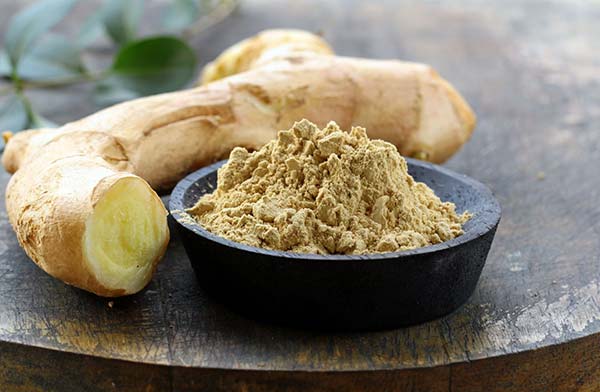
In the first study of its kind, ginger is found to be an effective treatment for heavy menstrual bleeding in young women.
Heavy menstrual bleeding (menorrhagia) is one of the most common gynecological problems in women, accounting for approximately 15% of all primary care consultations or outpatient referrals to hospitals, and is treated conventionally with a combination of the following interventions: iron supplements, nonsteroidal anti-inflammatory drugs (NSAIDs), oral contraceptives, oral progesterone and a progestin-containing hormonal IUD marketed as Mirena.
Most of these interventions have serious, if not also life-threatening side effects, and which is why safe, evidence-based, natural alternatives are sorely needed today.
Thankfully, research on botanical therapies is exploding today, and a recent study published in the journal Phytotherapy Research shows that ginger may in fact offer an excellent natural solution for this all too common condition in women.
Titled, "Effect of Ginger (Zingiber officinale) on Heavy Menstrual Bleeding: A Placebo-Controlled, Randomized Clinical Trial,"[i] the doubled-blind, placebo-controlled study enrolled 92 young women experiencing heavy menstrual bleeding and who were found free of the following exclusion criteria:
(a) having irregular menstrual cycles;
(b) being diagnosed with any gynecological diseases such as endometriosis, ovarian cysts, etc.;
(c) taking regular hormonal medications or NSAIDs;
(d) vaginal infection or pelvic inflammatory disease; and
(e) overweight/obesity ((BMI > 25) or underweight (BMI < 18.5).
The study subjects were evaluated for six consecutive menstrual cycles. After an initial 3-week assessment period, the participants were randomly allocated into two study groups: one receiving 250 mg dried ginger capsules and the other receiving placebo capsules filled with lactose (milk sugar), for another 3-week period.
The results were reported as follows:
"The level of menstrual blood loss dramatically declined during the three intervention cycles in ginger-receiving group. The decrease of blood loss in ginger-receiving group was significantly more remarkable than that of participants receiving placebo (p < 0.001). Minimum number of participants reported adverse effects."
The study concluded:
"Considering the results of our study, ginger can be known as a highly effective treatment in the reduction of menstrual blood loss and the promotion of the quality of life of young women. It is cheap, easy to use and have fewer side effects than other chemical medications and invasive approaches."
The truly remarkable thing about using ginger to alleviate heavy menstrual bleeding (HMB) is that this food-grade herb has also been proven to reduce pain and inflammation – symptoms which often come along with a dysregulated menstrual cycle (i.e. dysmenorrhea). Ginger therefore may 'free two birds with one hand.' Truly, this is the beauty of botanical therapies: they often have as many side benefits as synthetic drugs have side effects. For example, take a look at the over 100 health benefits ginger has been proven to confer on our database: ginger health benefits. This is not to say they are without potential adverse effects; however, when using 'spices' and foods as alternatives to drugs, the risk of such reactions are significantly reduced. And who could really be afraid of taking a little ginger?
[i] Farzaneh Kashefi, Marjan Khajehei, Mohammad Alavinia, Ebrahim Golmakani, Javad Asili. Effect of Ginger (Zingiber officinale) on Heavy Menstrual Bleeding: A Placebo-Controlled, Randomized Clinical Trial. Phytother Res. 2014 Oct 8. Epub 2014 Oct 8. PMID: 25298352
Why We May Need Viruses More Than Vaccines
- By Sayer Ji, Founder - November 28th 2014
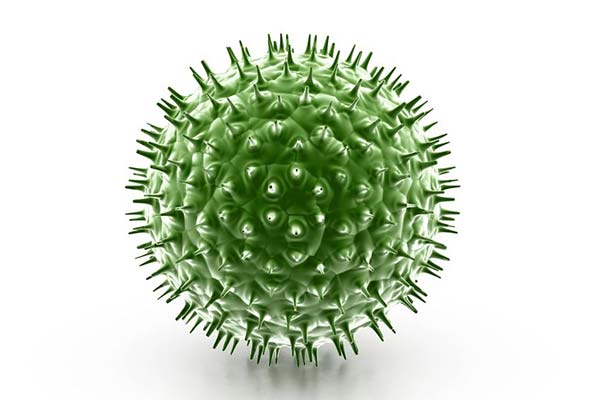
A groundbreaking study published this month in Nature challenges a century old assumption about the innate pathogenicity of these extremely small, self-replicating particles known as viruses.
Titled, "An enteric virus can replace the beneficial function of commensal bacteria," researchers found that an "enteric RNA virus can replace the beneficial function of commensal bacteria in the intestine." Known as murine (mouse) noravirus (MNV), researchers found that infecting germ-free or antibiotic-treated mice infection with MNV "restored intestinal morphology and lymphocyte function without inducing overt inflammation and disease."
The researchers found:
"Importantly, MNV infection offset the deleterious effect of treatment with antibiotics in models of intestinal injury and pathogenic bacterial infection. These data indicate that eukaryotic viruses have the capacity to support intestinal homeostasis and shape mucosal immunity, similarly to commensal bacteria."
Despite the commonly held belief that viruses are vectors of morbidity and mortality that must be vaccinated against in order to save us from inevitable harm and death, the new study dovetails with a growing body of research showing that our own genome is 8% viral in origin.
Reporting on the new study, in an article well worth reading, the Science Daily states:
"The new findings are the first strong evidence that viruses in the gastrointestinal tract can help maintain health and heal a damaged gut."
They summarized the study's findings as follows:
"The team infected germ-free mice and antibiotic-treated mice with MNV and found that the infection triggered the repair of intestinal tissue damaged by inflammation, restored intestinal cell numbers, restored intestinal cell function, and normalized tissue architecture. The results were apparent after just 2 weeks of MNV infection.
Infection with MNV also helped restore the gut's immune system. The investigators do not yet know how the virus supports the immune system. They did find, however, increased signaling by antiviral type 1 interferon proteins, suggesting the virus was playing a key role in driving the immune response.
The investigators also documented a doubling of T-cell levels in the blood and detectable levels of antibodies in the gut and blood of antibiotic-treated mice after MNV infection. These measures were consistent with a normalization of the immune response. The authors conclude that viral infection of the gut may be helpful once antibiotic treatment has wiped out intestinal bacteria.
Treatment with MNV was also able to improve survival in antibiotic-treated mice receiving the damaging chemical dextran sodium sulphate."
As our knowledge of the critical role of microbes increases, a paradigm-shift is occurring in medicine that is only beginning to trickle down to clinical practice. If our very identity depends on 'germs' – e.g. the bacteria within our body account for 10 times more cells and 99% more genetic material that found in the human body itself – the discovery that the viruses in our body – the total number referred to as the virome – also perform indispensable functions in supporting and maintaining our health, turns on its head widely held assumptions about their role in contributing to human disease and various pathologies.
As reported in the Science Daily article, the senior investigator of the study Ken Cadwell, PhD, from New York University, states:
"We have known for a long time that people get infected all the time with viruses and bacteria, and they don't get sick." "Now we have scientific evidence that not every viral infection is bad, but may actually be beneficial to health, just as we know that many bacterial infections are good for maintaining health."
Consistent with the 'hygiene hypothesis,' natural infections during childhood and onward, may prime our immune system and help to balance the Th1 (innate) and Th2 (adaptive) poles of immunity, producing a healthy immune system as a result. Vaccines, by disrupting this evolutionarily determined balance, may be contributing to widespread immune dysregulation, both suppressing innate immune mechanisms as well as over-stimulating the adaptive pole, contributing to widespread autoimmunity in exposed populations.
As science and molecular biology progresses and continues to reveal the inherent intelligence within the commensal relationship of the human body to the microbial universe, we are left with a crucial question: is the present-day globally orchestrated vaccine agenda really improving health, or does it belie a hubris that shirks the scientific evidence in favor of an agenda that wishes to exert control over the human body due to economic and socio-political agendas?
For additional research on why vaccines do not make sense evolutionarily, read our article on the topic: Why Vaccines Aren't Paleo and Vaccination Agenda: An Implicit Transhumanism / Dehumanism
- You are here:
-
Home

- Health